

Assurance
- Our skilled engineers examine, monitor, verify, and inspect the whole defined scope of work on a project to ensure adherence to tight standards.
- In reality, experience has proven that faults may arise in piles. The goal of testing is to detect such defects before they cause any harm. UEF's humble history and experiences proves our excellence with no major failings till this day.
OUR TESTING TECHNIQUES INCLUDE THE FOLLOWING:
- Pile Integrity test
- Cross-hole sonic logging
- Caliper logging
- High strain dynamic testing
- Static load testing
- Osterberg cell (o-cell) testing
Pile Integrity test:
Pile Integrity Testing is a quick, low-cost, non-destructive method for detecting pile flaws such as voids, fractures, necking, flaws, and so on.
It determines the integrity, proportions, continuity, and material uniformity of the pile.
Cross-hole sonic logging:
Cross-Hole Sonic Logging enables the discovery of concrete flaws. It indicates the quality of the concrete throughout the pile shaft. This approach applies to piles of any size and can be employed on diaphragm walls or any other comparable concrete construction.
Caliper logging:
Borehole caliper logging is widely used to quantify fluctuations in borehole diameter over the duration of the excavation. Borehole volume may be calculated using information such as borehole diameter, shape, and roughness.
High strain dynamic testing:
The pile top is struck with a drop hammer from a specified height during the test. A skilled and experienced specialist would evaluate the test findings on-site to determine whether the pile should be approved or refused. The primary goal of this test is to assess pile static capacity, structural integrity, hammer performance, pile stresses, and soil properties such as soil damping coefficient.
Static load testing:
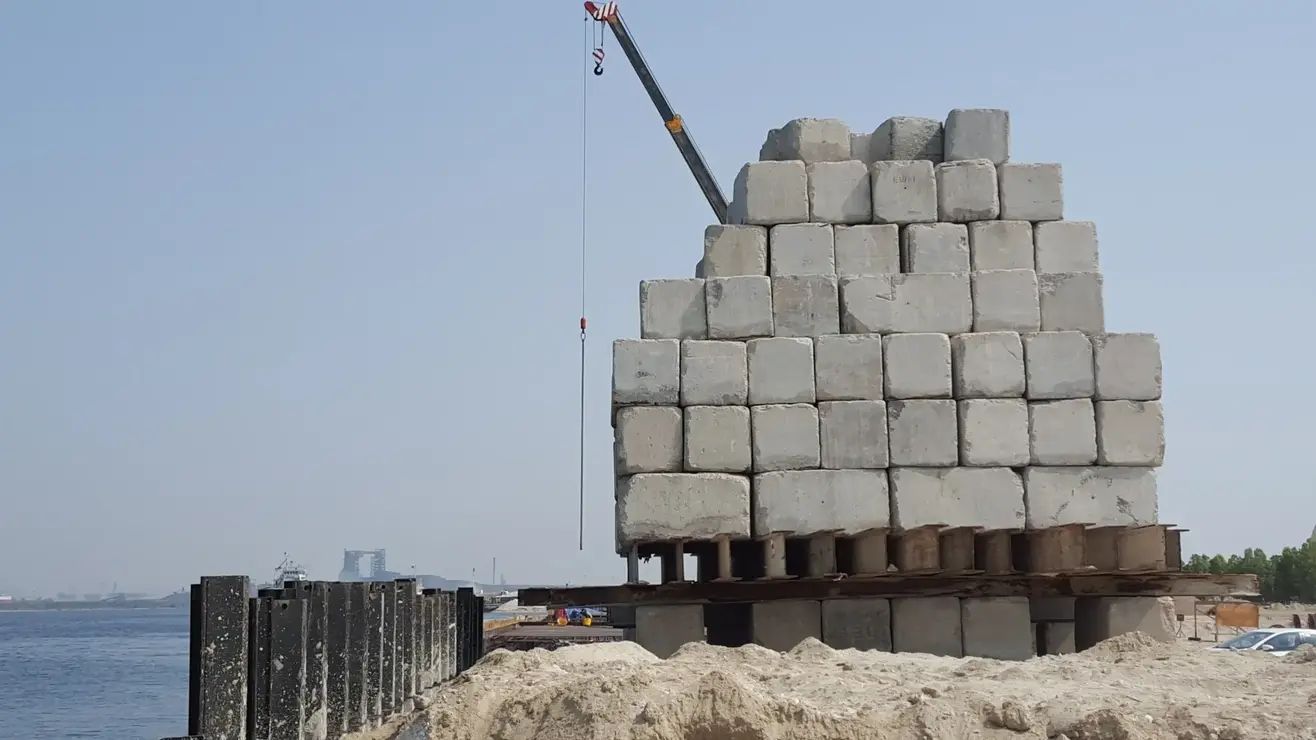
This is the most effective and efficient approach for calculating pile load capacity.
It is the most basic type of pile load test and is used to determine pile performance. This procedure is applicable to all sorts of heaps, independent of installation method.
It entails measuring pile head displacement directly in response to a physically applied test load.
Osterberg cell (o-cell) testing:
The O-cell is a sacrificial jacking device that is hydraulically operated and inserted into the foundation unit. The O-cell automatically isolates resistance data by working in two directions, upward against side-shear and downward against end-bearing. The O-Cell load test is not limited by the restrictions of above structural beams and tie-down piles since it is installed within the foundation unit. The O-cell, on the other hand, gets all of its reactions from the soil and/or rock system. Because no reaction system is required, it is a convenient, affordable, and safe solution.